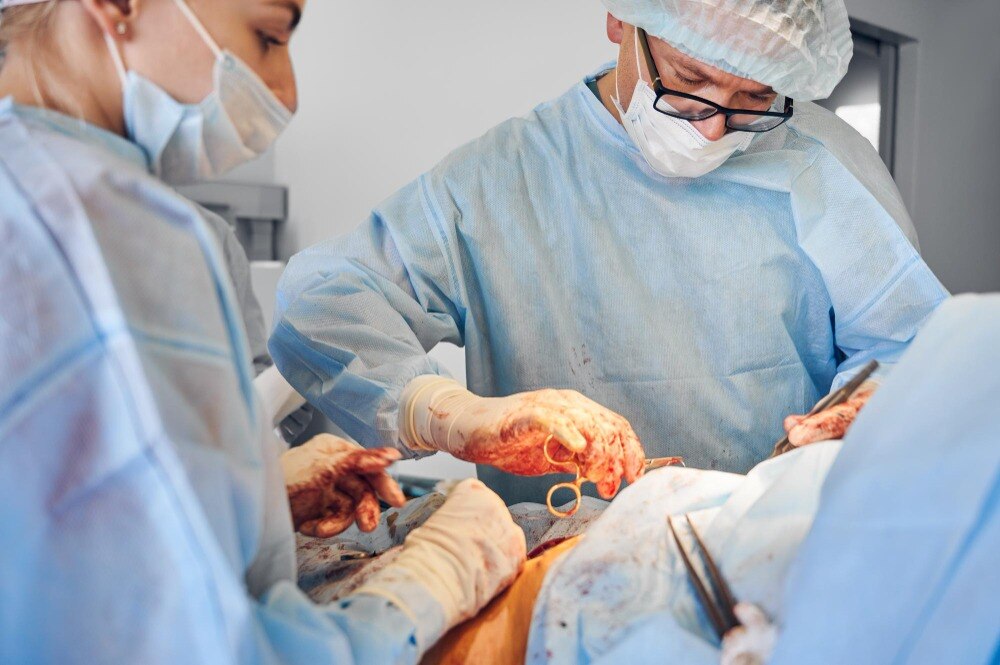
Severe abdominal pain is an emergency decision before it is a surgeon-search problem. You will learn which symptoms require immediate hospital assessment, how doctors determine whether laparoscopy is safe, and what to verify before choosing a surgical team in Thane.
Key takeaways
- Go to emergency care for severe or worsening pain, fainting, rigid abdomen, or blood.
- Appendicitis, ectopic pregnancy, and internal bleeding need urgent specialist assessment.
- Surgeons choose laparoscopy or open surgery based on stability, diagnosis, and bleeding risk.
- Report fever, worsening pain, vomiting, wound redness, or breathlessness after discharge.
When abdominal pain requires emergency care instead of an appointment
Call emergency services or go to the nearest emergency department now rather than search for laparoscopic surgeons in Thane for abdominal problems when abdominal pain is severe, rapidly worsening, or paired with any of these signs:
- A rigid abdomen or marked swelling
- Repeated vomiting or inability to keep fluids down
- Inability to pass stool or gas
- Blood in vomit or stool
- Fainting, confusion, or shock symptoms such as cold, clammy skin, pale appearance, rapid pulse, or extreme weakness
- High fever with worsening pain, weakness, or deterioration
- Heavy vaginal bleeding
- Abdominal or pelvic pain when pregnancy is possible
Do not wait for a routine consultation, and do not delay emergency care to fast at home. The emergency team will manage food, fluid, and aspiration risks after you arrive.
Take your medication list and allergy information if available, but do not drive yourself if you are faint, confused, severely weak, or showing signs of shock.
If you are of reproductive age, request pregnancy testing even if you used contraception. Contraception does not completely exclude pregnancy, and an ectopic pregnancy can cause abdominal pain, vaginal bleeding, and life-threatening internal bleeding when it ruptures. Emergency assessment—not an infertility consultation or a routine laparoscopy appointment—comes first.
Which urgent conditions may need laparoscopy, and which need another treatment
Appendicitis, ectopic pregnancy, ovarian torsion, ruptured cyst, perforation, or internal bleeding can require urgent surgery. Diagnostic laparoscopy lets the surgeon inspect the abdomen when scans and tests have not established the cause. Therapeutic laparoscopy treats the problem during that operation when safe: removing an appendix, controlling bleeding, untwisting an ovary, or treating a ruptured cyst.
| Condition | Possible treatment | When another approach may be better |
|---|---|---|
| Appendicitis | Laparoscopic appendix removal | Open surgery if infection, swelling, or instability prevents safe access |
| Gallstones or cholecystitis | Laparoscopic gallbladder removal | Biliary colic may allow observation; bile-duct obstruction may first need endoscopic stone removal |
| Pancreatitis or sepsis | Fluids, antibiotics, drainage, and source control | Laparoscopy alone is not the first treatment for every case |
| Ectopic pregnancy | Laparoscopy to remove or repair the pregnancy | Medication such as methotrexate fits selected unruptured cases; rupture may require open surgery |
| Ovarian torsion | Urgent laparoscopy to untwist and preserve the ovary | Do not wait for Doppler ultrasound to conclusively prove torsion |
| Ruptured ovarian cyst | Observation, pain treatment, or laparoscopy to control bleeding | Major bleeding can require open surgery |
| Bowel obstruction | Surgery when strangulation or complete blockage exists | Fluids, observation, or decompression may suit selected cases |
| Perforation | Urgent repair, often surgery | Open surgery may provide faster, wider access |
| Abscess | Image-guided drainage and antibiotics | Laparoscopy is used when drainage fails or another source needs treatment |
A laparoscopy doctor in Thane or laparoscopic surgeons in Thane must assess you before recommending an operation. Persistent pain, shock, infection, or uncontrolled bleeding makes emergency-hospital capability more important than a procedure label.
How doctors decide between laparoscopic and open abdominal surgery
Before recommending minimally invasive surgery in Thane, the surgeon reviews your pain, vomiting, bleeding, previous operations, medicines, allergies, and medical history. Examination includes the abdomen and, when relevant, the pelvis. Staff record blood pressure, pulse, temperature, and oxygen level.
Testing may include a pregnancy test, complete blood count, electrolytes, kidney and liver tests when relevant, and urine testing. Ultrasound or Doppler ultrasound can assess organs, blood flow, fluid, and pregnancy-related causes. CT gives wider detail for bowel, bleeding, or infection; MRI becomes useful when ultrasound is inconclusive or pregnancy changes the imaging pathway.
The suspected diagnosis, prior operations and adhesions, anticoagulant use, heart or lung disease, and fitness for general anaesthesia shape the plan.
| Option | Access and anaesthesia | Usual trade-offs |
|---|---|---|
| Laparoscopy | Small incisions, carbon-dioxide insufflation, general anaesthesia, camera-assisted visibility | Less wound care, pain, hospital time, and recovery burden than a similar open operation; access can be limited |
| Open surgery | One larger incision, usually general anaesthesia, direct wide access and visibility | More wound care and pain, with longer hospital stay and recovery, but faster broad access when needed |
Unstable blood pressure, major uncontrolled bleeding, severe bowel swelling or infection, extensive adhesions, advanced cardiopulmonary disease, inability to tolerate general anaesthesia, or the need for rapid wide access can make open surgery safer.
Consent must cover procedure-specific bleeding, infection, organ injury, blood clots, anaesthesia complications, and conversion to open surgery. Minimally invasive surgery in Thane is not risk-free; conversion is a safety decision, not a failure.
What to expect from emergency assessment through the operation
After arrival, triage checks pain, blood pressure, pulse, temperature, oxygen level, mental state, and abdominal or pelvic findings. Staff start monitoring, take blood for a complete blood count, electrolytes, kidney and liver tests, clotting tests, urine testing, and pregnancy testing when relevant; ultrasound, Doppler ultrasound, or CT follows the examination.
The surgeon and anaesthetist review the suspected condition, previous operations, allergies, medicines, and blood thinners. They explain consent, bleeding, infection, organ injury, clots, anaesthesia, and conversion to open surgery. Follow fasting instructions when time permits; emergency surgery takes priority over home fasting rules, and staff reduce aspiration risk after arrival as safely as possible.
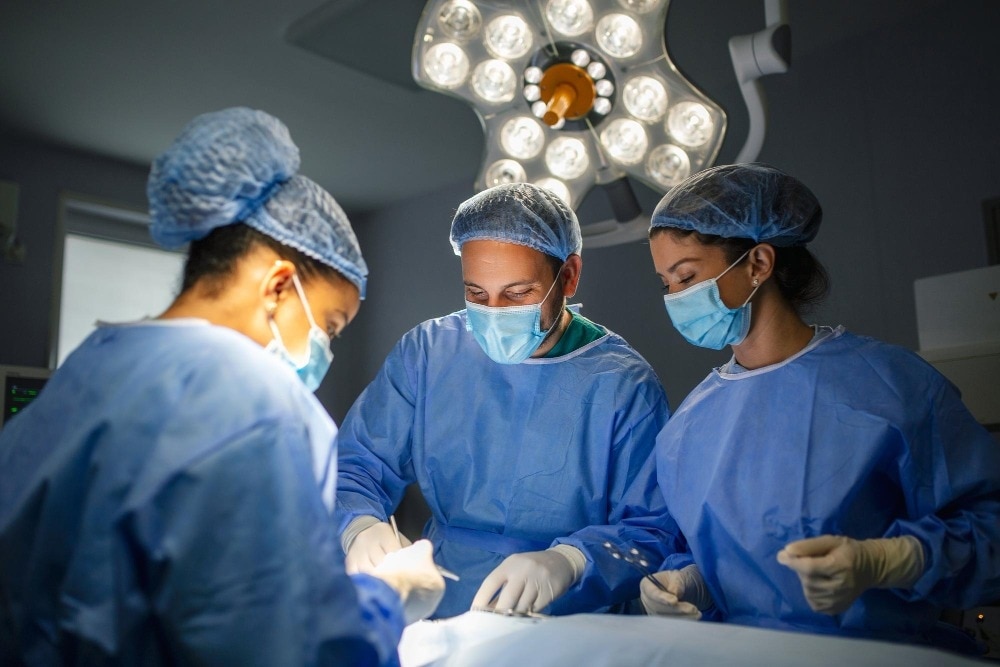
Diagnostic laparoscopy inspects the abdomen first; when safe, treatment follows during the same operation. The team may remove an appendix, control bleeding, untwist an ovary, or treat a ruptured cyst, then send tissue or fluid for laboratory testing. In recovery, expect monitoring, pain and nausea control, clot prevention, and discharge planning.
Compare a facility by asking:
- Who will operate, and how often do they treat this suspected condition?
- Is an experienced anaesthetist present?
- Are imaging, blood products, postoperative monitoring, intensive-care support, and a safe open-surgery pathway available?
| Laparoscopy | Smaller wounds and often easier recovery | Stable patient with suitable disease |
|---|---|---|
| Open surgery | Wider access for bleeding, swelling, infection, or adhesions | Unsafe or inadequate laparoscopic access |
Jijai Womens Hospital Thane may be one option, but confirm its emergency, anaesthetic, imaging, blood-bank, and postoperative services before relying on it for an acute problem, rather than choosing from a “laparoscopic surgery near me” search or a “laparoscopy doctor in Thane” listing.
Recovery, conversion to open surgery, and warning signs after discharge
Smaller laparoscopic wounds often mean less wound pain, earlier movement, and a shorter hospital stay than a similar open operation. Recovery still depends on perforation, infection, bleeding, bowel function, the procedure performed, and other illnesses.
| Option | Usual advantage | Important limitation |
|---|---|---|
| Laparoscopy | Smaller wounds and often faster recovery | Carbon-dioxide insufflation, general anaesthesia, specialised equipment, and possible conversion |
| Open surgery | Rapid, wide access for bleeding, swelling, infection, or difficult anatomy | Larger wound, more wound pain, and often slower recovery |
Conversion to open surgery is a safety decision, not a failed operation. Your surgeon may need wider access to control bleeding, remove diseased tissue, or protect an injured organ.
Follow the discharge sheet: keep wounds clean, change dressings as instructed, and shower or avoid bathing, swimming, and soaking exactly as directed. Take prescribed pain relief; do not wait until severe pain develops. Walk regularly, perform leg exercises, and use compression stockings or blood-thinning medicine if prescribed.
Increasing gas, bowel sounds, and passage of gas usually precede eating normally; follow instructions if stool or gas does not return.
Contact the treating hospital urgently for:
- Worsening pain, fever, repeated vomiting, fainting, breathlessness, or chest pain
- Increasing abdominal swelling, inability to pass stool or gas, or reduced urine output
- Heavy bleeding, pus, or spreading redness at a wound
Attend pathology follow-up for specimen results. A laparoscopic surgeons in Thane listing cannot replace postoperative access to your treating team.
Frequently asked questions
When should abdominal pain receive emergency care instead of an appointment?
Go to the nearest emergency department when pain is severe or rapidly worsening, or comes with fainting, a rigid or swollen abdomen, repeated vomiting, fever, blood in vomit or stool, or possible pregnancy.
Which urgent abdominal conditions may need laparoscopy?
Suspected appendicitis, gallbladder inflammation, ovarian cyst complications, ectopic pregnancy, and some causes of internal bleeding may need urgent laparoscopic assessment or treatment. The final approach depends on examination, imaging, pregnancy status, and overall stability.
When is open abdominal surgery safer than laparoscopy?
Open surgery may be safer when there is major bleeding, widespread infection, severe bowel injury, unstable blood pressure, extensive scar tissue, or a need for rapid access to the entire abdomen.
What happens before emergency laparoscopic surgery?
Doctors assess vital signs, examine the abdomen, review medical history and medicines, and order tests such as blood work, urine testing, ultrasound, or CT. The team then discusses anaesthesia, the planned procedure, possible conversion to open surgery, and recovery.
What warning signs require medical review after discharge?
Seek urgent medical advice for worsening abdominal pain, persistent vomiting, fever, increasing wound redness or discharge, heavy bleeding, fainting, chest pain, or shortness of breath.
Keywords